22
Sep
- Blog
- September 22,2026
- 0 Comments
Mansoon illness
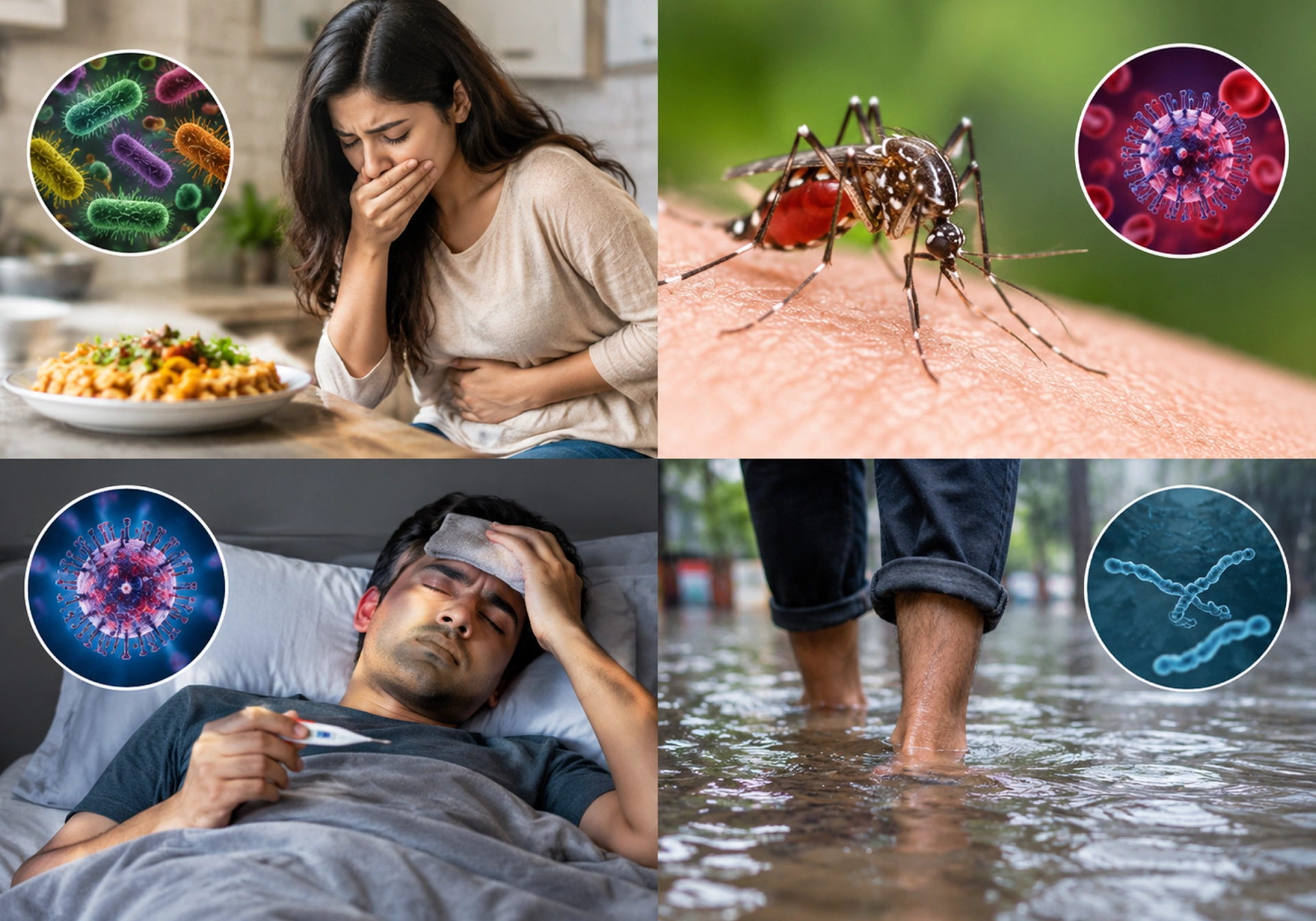
1. Food poisoning in monsoon
2. Malaria & Dengue
3. Viral Fever
4. Leptospirosis
Causes –
Virus – norovirus / rotavirus
Bacteria – E. coli / salmonella / campylobacter
Parasites – E histolytica / giardia
Food poisoning symptoms-
• Nausea.
• Vomiting
• Diarrhea
• Fever
•Abdominal pain
•Low blood pressure
•Multiple organ failure
Prevention –
A. Wash hands(Wash hands with soap and running water)-
- before preparing food.
- after handling raw meat, fish,poultry and eggs.
- before eating.
- after using the toilet.
- after changing diapers.
- after taking out trash.
- after blowing your nose.
- after touching a animal.
B. Water safety( use only)-
- Bottled water or
- Filtered water or
- Boiling water for three minutes, followed by cooling.
C. Do not drink raw milk or milk products.
D. Wash raw fruits and vegetables using clean running water.
E. Wash knives, and cutting boards after handling uncooked food.
F. Avoid cross-contamination; keep raw meat, fish, and poultry separate from other foods.
G. Thoroughly cook raw food from animal sources-
While cooking use a meat thermometer-
• Cook beef, veal, and lamb (steaks, roasts, chops) to 145°F.
• Cook ground beef, pork, veal, and lamb to 160°F.
• Cook poultry (chicken, turkey) to 165°F.
• Cook fresh pork (roasts, chops, ham that is not precooked) to 145°F.
• Cook precooked ham to 140°F.
• Cook fish until the flesh is firm and separates easily with a fork.
• Cook shellfish until the flesh is firm.
• Cook eggs until the yolk and white are firm.
H. Use perishable, or ready-to-eat food as soon as possible.
I. Reheat leftovers to 165 degrees Fahrenheit before eating.
J. Storage-
- Refrigerate foods promptly. Never leave cooked foods at room temperature for more than one hour if the room temperature is above 90•F.
- Do not thaw or marinate food on the counter.Thaw safely-In the refrigerator/In cold water/In the microwave
- Always marinate food in the refrigerator.
- Keep the refrigerator temperature at 40°F or lower and the freezer at 0°F or lower.
K.Avoid eating from street vendors or at buffets.
L. If eating out is unavoidable –
- eat freshly cooked hot food items.
- eat packaged food.
- do not buy cooked food that is stored next to raw food.
M. Avoid tasting or smelling food to see if it’s good. You can’t taste, smell, or see the germs that cause food poisoning.
Cause–
- Malaria-Plasmodium (4 types)
- Dengue-Dengue virus (4 types)
Transmission–
mosquitoes bites.
Symptoms-
- Fever/ chills.
- Body aches.
- Rash.
- Bleeding.
- Confusion, drowsiness, convulsions.
- Jaundice.
- Low blood pressure.
- Kidney failure.
Prevention–
1. Mosquito control and environmental measures-
- Mosquitoes breed in standing water hence avoid water stagnation. Drain any standing water near your home, such as wading pools, buckets, and potted plants with saucers.
- Outdoor insecticide spray.
- Indoor residual spray.
- Screen on windows & doors.
2.Personal protection from mosquito bites-
- avoid sleeping outdoors.
- Sleep in air-condition room.
- Sleep under a bed net treated with bug spray.
- appropriate clothing to prevent bites. Wear shoes, long-sleeved shirts, and long pants when outside.
- Topical repellent. Wear bug spray or cream that contains DEET or a chemical called “picaridin.”
- Avoid outdoor activities during early evening/early mornings.
3.Vaccination in endemic areas-
Dengue vaccine–
Qdenga – live, attenuated tetravalent dengue vaccine for individuals 4 to 60 years of age.
The recommended immunisation schedule consists of two doses of 0.5 ml each, administered at an interval of three months (0 and 3 months)
Other vaccines (not licensed in India)- Dengvaxia Butantan-DV
Malaria vaccine-
India is currently developing its own indigenous multi-stage malaria vaccine called AdFalciVax.
Others–
RTS,S/AS01 vaccine and the R21/Matrix-M vaccine for children living in areas of moderate to high transmission used in Africa.
4.Chemoprevention for travellers- ( under medical guidance)
Chemoprophylaxis should be started under medical supervision prior to travel, continued during exposure and for some time following departure from the endemic area. Important considerations before prophylaxis include pregnancy, kidney function, history of neurologic and psychiatric disorders, arrhythmia, and glucose-6-phosphate dehydrogenase (G6PD) status. Do not self medicate as serious side effects may result due to inappropriate medication.
In addition to geographical location of travel other important trip considerations include-
- Season – Risk is higher in rainy season.
- Daytime versus nighttime outdoor exposure – Anopheles mosquitoes generally bite between dusk and dawn.
- Type of accommodation – Risk is increased with tenting/open-air accommodations.
- Elevation – Risk is lower at >2000 meters above sea level.
5.Effective treatment of individual cases to reduce transmission.
Cause-
- Flu virus ( influenza A and B)
- Swine flu(H1N1), Covid etc.
Transmission–
- Airborne
- Touch
Symptoms-
- fever
- body ache
- runny or stuffy nose
- throat pain
- exhaustion.
- cough & sputum
- breathing difficulty
Prevention-
1.Minimise/ Avoid exposure-
- avoid crowded places .
- Stay away from sick people.
- Avoid touching common surfaces in public places.
- Use face mask.
- Wash hands with soap and water.
- Use alcohol based sanitizer for hand hygiene.
2. Antiviral prophylaxis ( as per doctors advice) –
start within 48 hrs of exposure and continue for 7 days.
3. Annaul Influenza Vaccination.
Cause –
leptospira bacteria
Enters the humans via broken skin or mucus membrane ( mouth, nose, eyes) from water or soil contaminated with infected urine from rats, mice, dogs, live stocks or wild animals.
Enters the humans via broken skin or mucus membrane ( mouth, nose, eyes) from water or soil contaminated with infected urine from rats, mice, dogs, live stocks or wild animals.
Symptoms-
- Fever.
- Body aches.
- Rash.
- Bleeding.
- Nausea/ vomiting.
- Diarrhoea.
- Jaundice.
- Low blood pressure
- Multiple organ failure.
Prevention-
1.Avoid contact with contaminated water or soil-
- flood water
- Stagnant water.
- Farm soil.
- animal farm water runoff.
2.Post exposure prophylaxis-
If unavoidable contact has happened then ask doctor for antibiotic prophylaxis.
*The opinion expressed in the Blog is of Dr Vijay D’Silva
The information provided in the blog is for educational purpose only and does not substitute for professional medical advice, diagnosis or treatment.
Do not ‘self-diagnose/ treat’.
Consult a qualified medical professional for opinion and treatment.